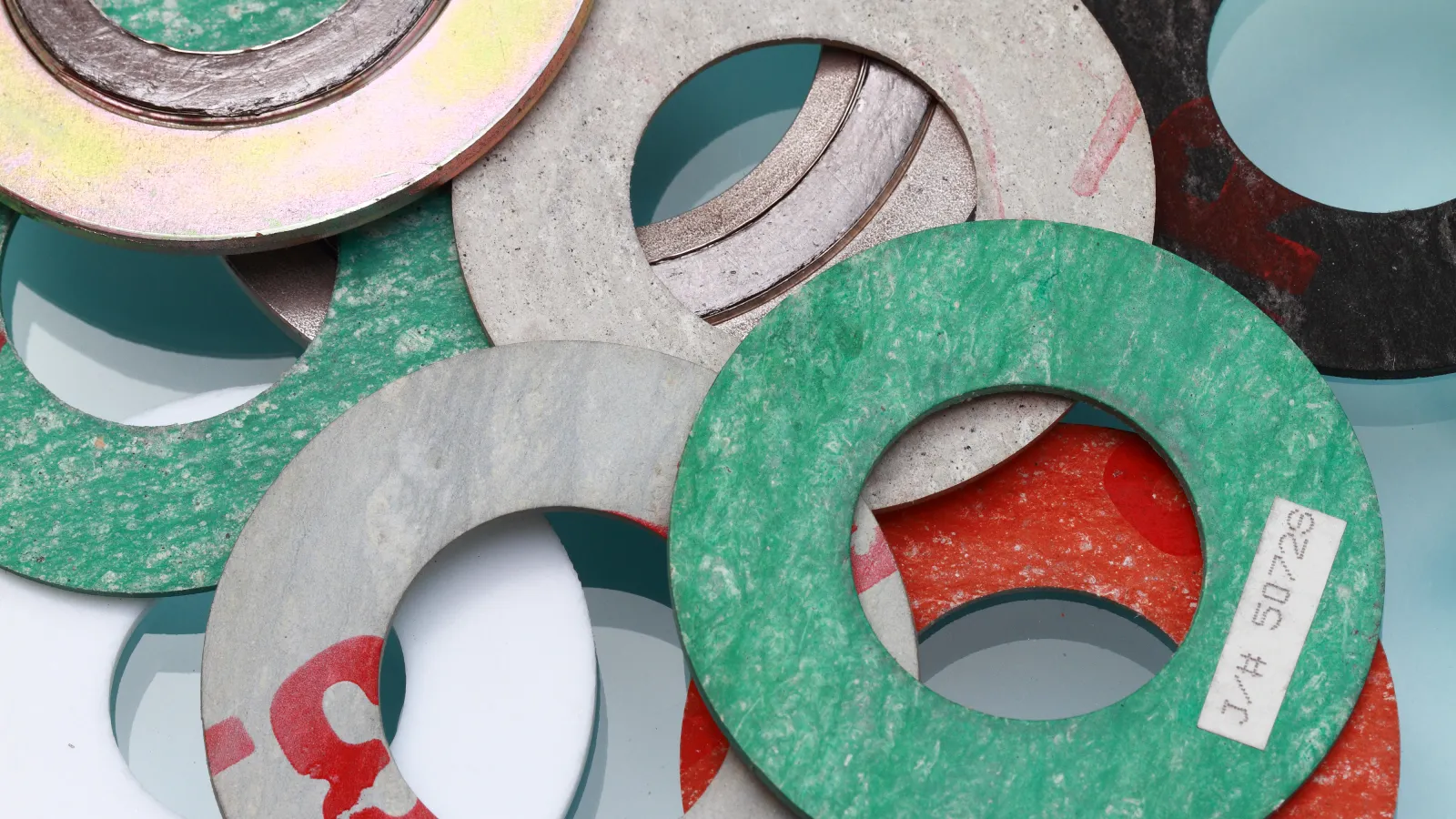
At Rubrings Company, we manufacture and supply a wide range of gaskets—a type of static seal designed to fill the space between two or more mating surfaces. Gaskets play a vital role in preventing leakage of fluids or gases in industrial systems, especially when the components are under pressure. They also help accommodate surface irregularities between joined parts, ensuring a secure and effective seal. Our gaskets are commonly produced from high-performance sheet materials that are durable, reliable, and suited to a variety of industrial applications. While asbestos was historically used for its sealing properties, Rubrings strictly uses non-asbestos materials due to modern safety and environmental standards. We offer gaskets made from a variety of materials, including: Rubber (Nitrile, Neoprene, EPDM, FPM/Viton®) PTFE (Teflon®) Silicone Graphite Cork Felt Polyurethane Fiberglass Metal-reinforced composites Other engineered polymers Some gaskets may also be used with sealants to enhance sealing performance, especially in demanding applications involving high temperature, pressure, or chemical exposure. With precision cutting and material expertise, Rubrings Company delivers gasket solutions that meet stringent industrial requirements for reliability, safety, and longevity.
One of the commonly known gaskets are pipe flange gaskets. These can be with or without bolt holes. The gaskets without bolt holes are commonly called "ring gaskets" and the ones with bolt holes are known as "full face gaskets". These are usually cut one of two ways. Die cut which is the simple method of taking a sheet of material and having the gasket shape "punched out" of it. The latest technology of doing this type of gasket is by "water-jet" where a thin stream of water is pressurized and cuts the shape of the gasket. Another type of gasket is a spiral-wound gasket. This type of gasket is comprised of a mix of metallic and filler materials. Generally the gasket has a metal wound outwards in a circular spiral with the filler material usually of a flexible graphite wound in the same manner but starting from the opposing side. This results in alternating layers of filler and metal. The filler material acts as the sealing element with the metal providing structural support
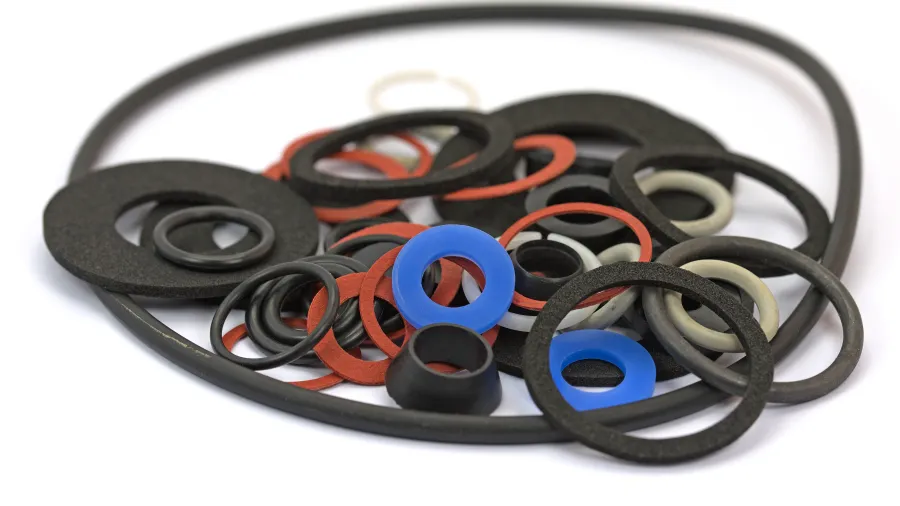
A wiper, also known as a rod wiper, dust seal, excluder or scraper, is a ring in a cylinder that is used to wipe or scrape dirt from the rod or shaft. A wiper helps prevent dirt particles from entering the hydraulic system. A rod wipers main function is to keep the rod and cylinder clean and free from foreign matter preventing premature failure. The wiper is not a pressure sealing element. Wipers most commonly snap into a groove. Some other wipers are made to press into a groove, such as a metal clad wiper. A wiper seal can be made and can function as a wiper and a rod seal all in one groove where space is an issue.